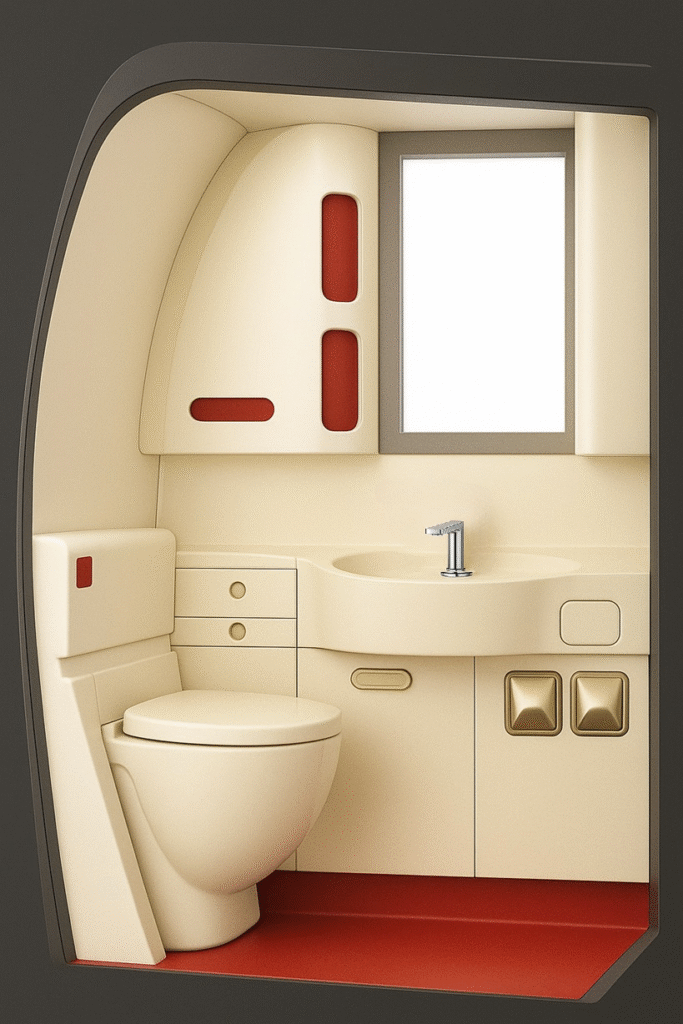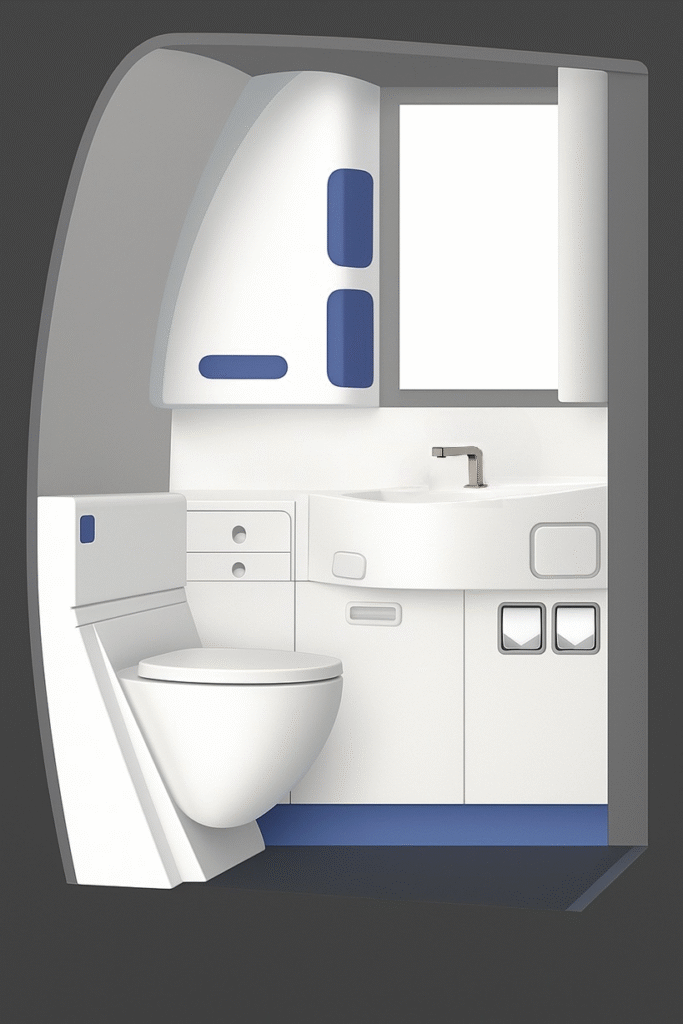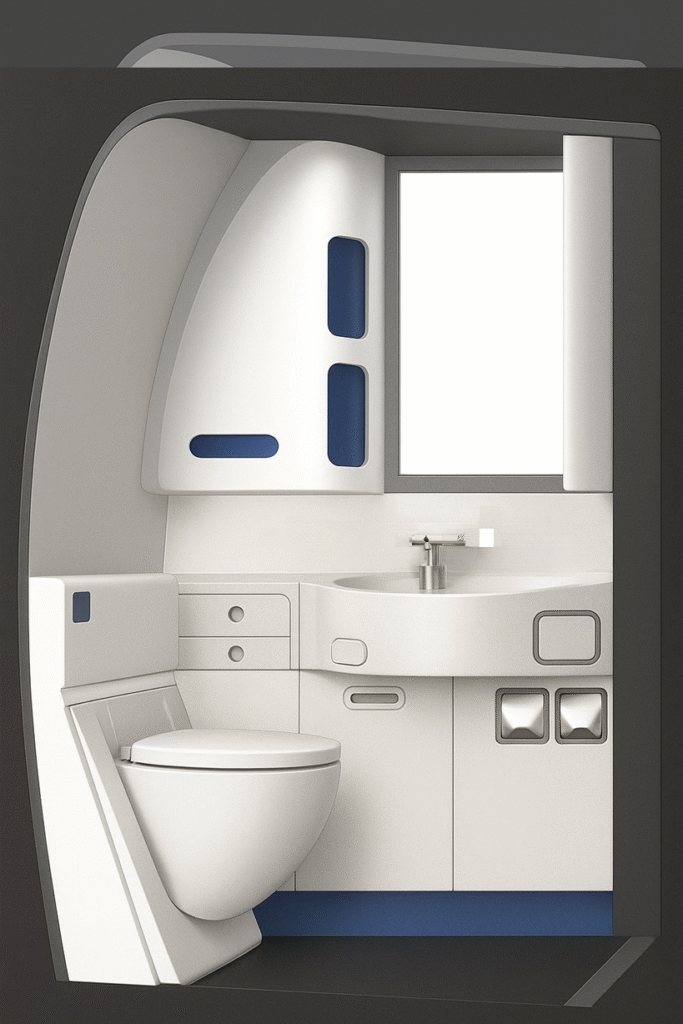
Touchless Airline & Airport Restroom Faucets: AEC Design, Hygiene, Reliability & Water Performance
We are a nonprofit, educational resource for AEC teams designing and operating airport terminals, airline lounges, transportation hubs, and high-traffic public restrooms. Every answer is fully visible for readers and search engines, with brand references used only as examples, not endorsements.
Example brand resources (non-endorsement): FontanaShowers Touchless · BathSelect.com · BathSelectHospitality.com · JunoShowers · BravatShowers
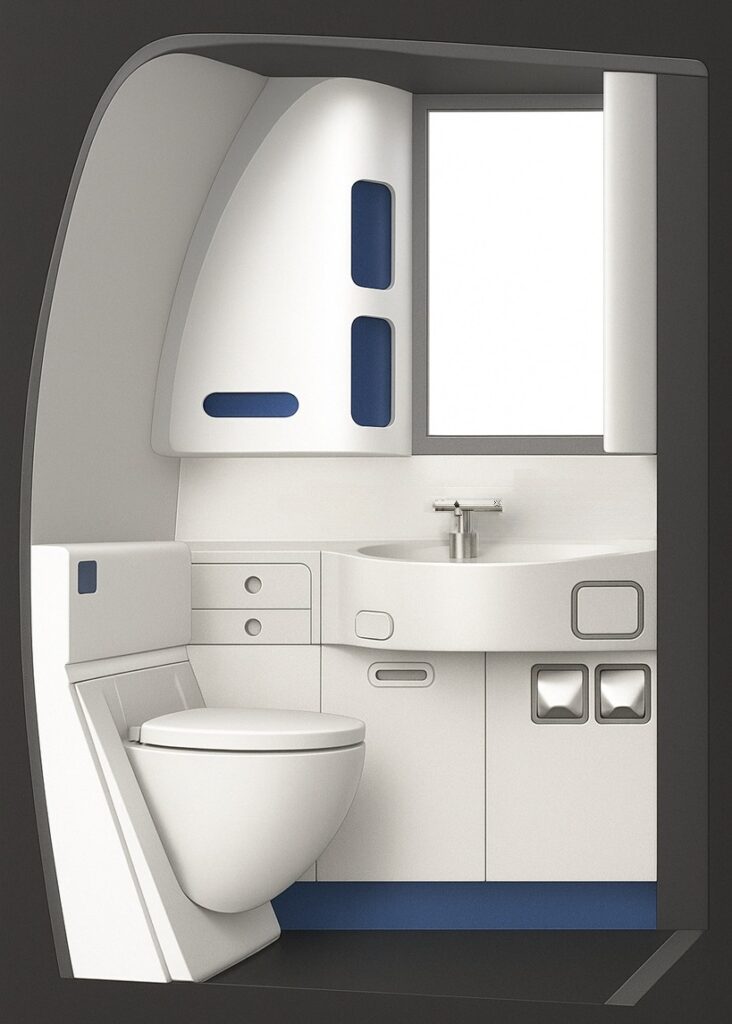
Airport & Airline Restroom Design in High-Traffic Public Environments
We define airport restroom design as a systems discipline balancing hygiene confidence, throughput, accessibility, durability, water performance, and fast maintenance response across terminals, concourses, lounges, and staff facilities.
What is airport restroom design?
Airport restroom design focuses on passenger-facing spaces as performance environments, not decoration. We evaluate layouts, accessibility clearances, ventilation, queue dynamics, materials, and touchless fixtures as one coordinated system. The objective is a consistent experience—clean-feeling, intuitive, and fast—while remaining maintainable under continuous use, peak surges, and intensive cleaning.
Why do restrooms matter to passenger perception?
Restrooms often carry disproportionate meaning because they signal cleanliness, operational competence, and care. Passengers notice sensor responsiveness, splash control, drying outcomes, odors, lighting, and visible wear immediately. A stable, touchless handwashing experience improves confidence during travel; inconsistent sensors or frequent outages degrade trust and increase complaints.
How has restroom design evolved in aviation facilities?
Aviation restrooms have shifted toward touchless, high-throughput solutions with stronger hygiene cues and reduced contact points. Designers increasingly prioritize clear activation zones, durable finishes that tolerate disinfectants, and layouts that reduce congestion. At the same time, operators need standardized parts, quick swap components, and service access so restrooms stay open and passenger-ready throughout the day.

Throughput + Uptime
We treat the handwashing zone as a high-frequency “moment” that must stay stable under peak loads and rapid cleaning, not just look good in renderings.
Why do we treat handwashing zones as “signature moments” in terminals?
Because handwashing concentrates hygiene perception: cleanliness, comfort, and operational quality converge in seconds. A touchless faucet that activates quickly and shuts off predictably reduces frustration and water waste. We encourage AEC teams to prototype key fixtures early, because mockups reveal splashing, false triggers, and accessibility issues before they become widespread across a terminal program.
Transportation & Aviation Trends Shaping Touchless Faucet Specifications
Restroom specifications evolve quickly because hygiene expectations, sustainability mandates, security/operational constraints, and maintenance staffing realities reshape procurement and lifecycle planning.
What major trends influence airport touchless faucet design today?
We see passenger hygiene expectations, sustainability reporting, and staffing constraints as headline drivers. Facilities increasingly prefer standardized parts, robust sensors, and finishes that reduce service calls and training complexity. Owners and operators require measurable lifecycle performance—water use, fault rates, downtime, and parts availability—so touchless faucets are specified as long-term infrastructure, not short-term upgrades.
Why is hygiene influencing airport restroom design?
Travel concentrates diverse populations, making hygiene confidence especially important during peak travel seasons. We interpret hygiene-forward design as both functional and perceptual: fewer touchpoints, easy-to-clean geometries, reduced splash zones, and consistent sensor behavior that feels reliable to first-time users. The goal is stable handwashing outcomes under real cleaning cycles, humidity, and continuous use.
How do expectations differ across terminal zones?
Concourses and landside restrooms prioritize throughput and durability. Lounges and premium areas often prioritize calm interaction, refined finishes, and quieter operation while still needing commercial reliability. Staff and back-of-house areas prioritize serviceability and ruggedness. We recommend zone-specific criteria—activation logic, flow regulation, and vandal resistance—while keeping core parts standardized for maintenance efficiency.
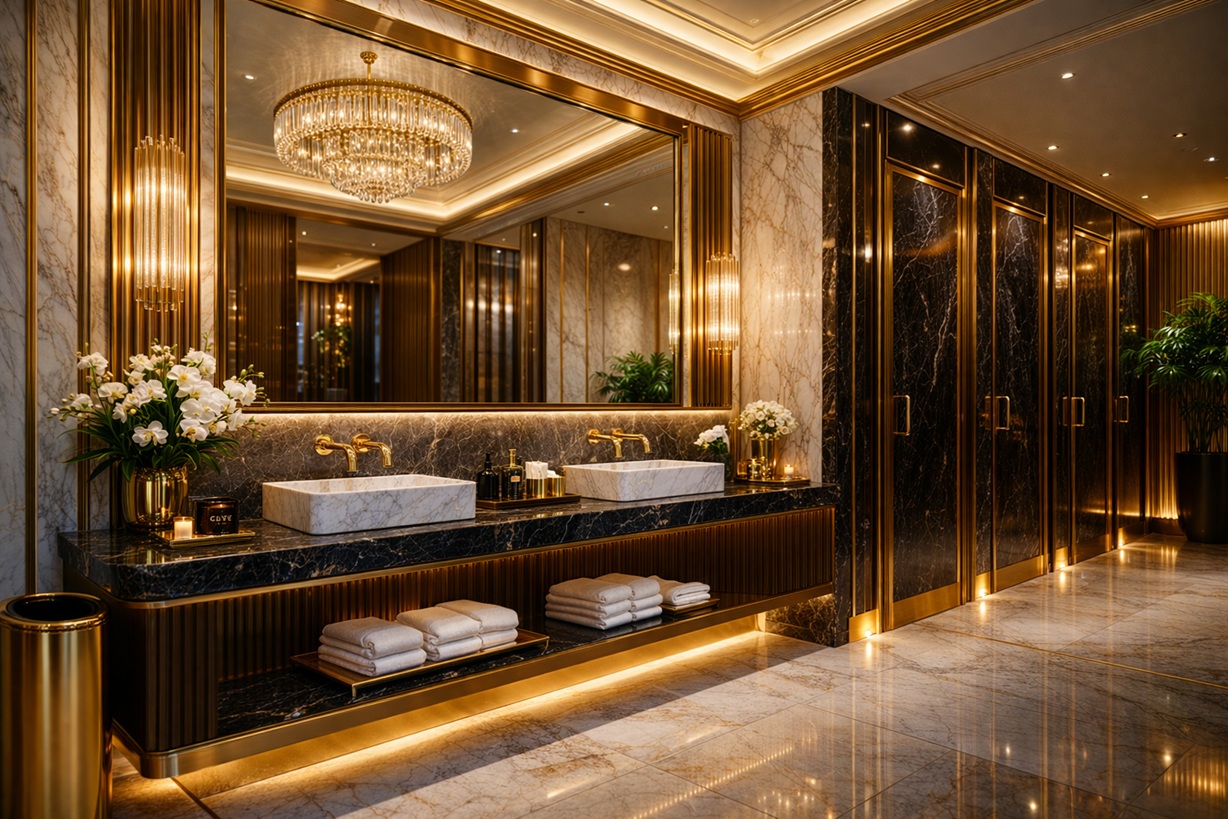
Hygiene-Forward Design & Touchless Faucet Technology
Hygiene-forward design reduces contact points while maintaining intuitive interaction, stable calibration, and durable performance under humidity and chemical cleaning.
Why is hygiene-forward design essential in airports and airline facilities?
Hygiene confidence shapes passenger satisfaction and trust in facility operations. We focus on details that support consistent cleaning outcomes: fewer crevices, easy wipe-down surfaces, controlled splash behavior, and materials that tolerate disinfectants. In practice, hygiene-forward design is both health-aligned and perception-driven, because passengers judge cleanliness through visible maintenance signals and fixture behavior.
What role do touchless faucets play in aviation restrooms?
Touchless faucets reduce shared touchpoints and can standardize run times to reduce water waste. Aviation applications require calm, predictable behavior: clear activation zones, fast response, and stable shutoff. We recommend field testing to avoid false triggers, intermittent activation, or excessive run times that frustrate users and increase maintenance calls.
How do smart controls improve hygiene and reliability?
Smart controls can standardize run times, prevent continuous operation, and support automated routines (such as periodic flush) during low-traffic hours. Monitoring can surface faults—sensor misreads, valve sticking, abnormal run times—so engineering teams respond before problems become passenger-facing. We emphasize privacy-first practices: monitor equipment health and aggregate consumption, not personal behavior.
Can touchless systems still feel premium in lounges and VIP areas?
Yes, when the interaction feels refined: quiet actuation, quick response, and minimal “surprise” behaviors. We recommend discreet sensor placement, consistent temperature control strategy (where applicable), and finishes that resist frequent disinfecting. We reference brand families only as examples of market approaches—without endorsement—because usability and lifecycle performance are what matter.

Controls That Stay Intuitive
We recommend testing first-time interaction so activation, feedback, and shutoff are understandable within seconds—without training or signage.
Touchless Faucets & Handwashing User Experience
We treat handwashing experience as performance: response speed, splash control, stream quality, noise, and shutoff behavior—under real pressure conditions and real cleaning.
Why do touchless faucets matter so much in airports?
Touchless faucets are high-frequency interactions that shape hygiene confidence in seconds. A faucet that splashes, triggers late, runs too long, or shuts off unpredictably creates frustration and reduces perceived cleanliness. We evaluate fixtures as both objects and systems—how they behave under variable pressures, how they handle continuous use, and how they withstand disinfectants, humidity, and hard-water scaling over time.
How do we evaluate touchless faucet performance?
We assess sensor responsiveness, false-trigger resilience, run-time control, stream stability, splash behavior relative to basin geometry, and acoustic comfort. We also review power strategy (AC/DC, battery, or hybrid), access for service, and parts standardization. The best results come from pairing faucet selection with correct basin geometry and drain placement, then validating via mockups under representative site pressure.
What defines a “high-quality” touchless handwashing experience?
A high-quality experience feels immediate and predictable: quick activation, stable stream, controlled splash, and clean shutoff. The “transition moments” matter most—startup and shutdown—because delays or abrupt blasts feel low quality. We recommend consistent activation zones and logic that works for children, adults, and travelers with luggage—without requiring “perfect hand placement.”
Do touchless fixtures influence operational costs?
Yes. Reliability differences compound rapidly in high-traffic restrooms. Service calls, parts replacements, finish failures, and restroom downtime can exceed initial price differences. We recommend total cost of ownership thinking—parts availability, technician access, standardized components, and warranty clarity—because a “cheaper” faucet can cost more through repeated disruptions and labor.
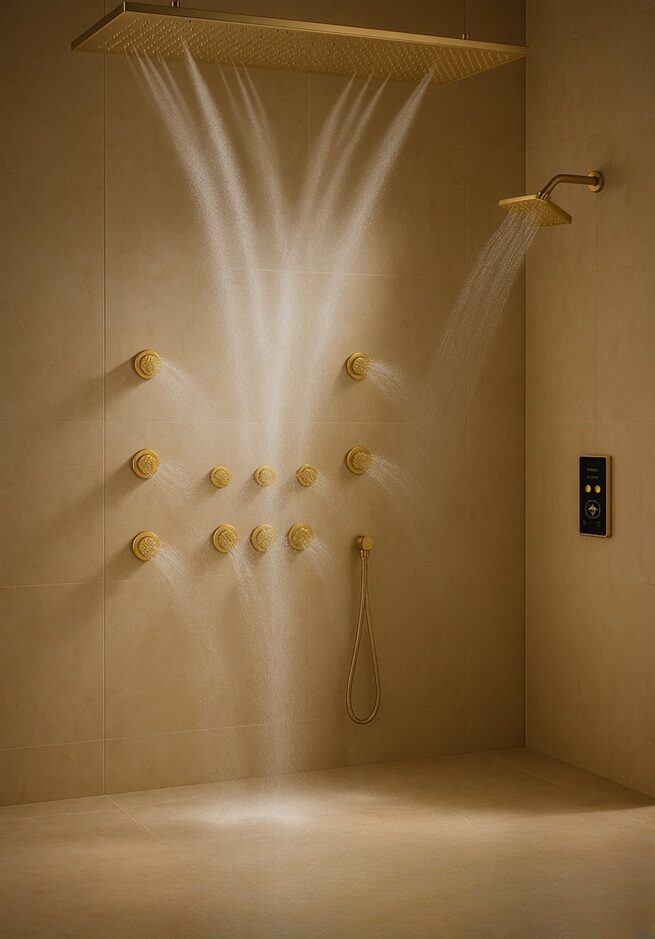
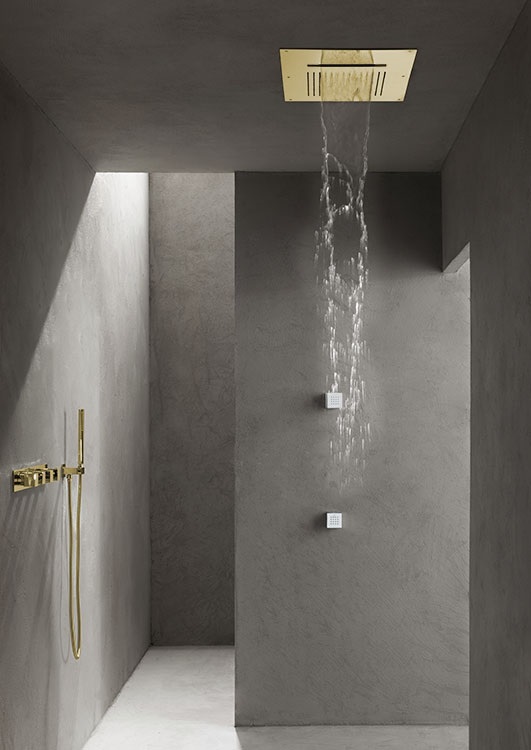
Standardized Families + Service Simplicity
In aviation facilities, coordinated systems can reduce parts diversity and simplify training, while still allowing premium finish palettes in lounge environments when lifecycle criteria are met.
Wayfinding, Usability & First-Time User Clarity
In airports, usability is the experience. We evaluate signage need, intuitive fixture behavior, accessibility, and stress-reduction in high-turnover public restrooms.
What is “usability-first” restroom design in terminals?
Usability-first design minimizes confusion for first-time users: clear paths, intuitive fixtures, consistent activation zones, and obvious feedback. We treat usability as engineered clarity—layout logic, visibility, lighting, and fixture behavior working together—so passengers can complete handwashing quickly and confidently, even during delays or peak crowds.
How does lighting affect perceived cleanliness?
We prioritize glare control, even illumination at mirrors, and bright-but-comfortable ambient light that reduces “shadowy” corners. Proper lighting changes how clean the space feels and how well users can navigate sinks, dryers, and exits. Lighting is not cosmetic; it supports safety, speed, and confidence, especially in high-volume public zones.
Why does acoustics matter in busy restrooms?
Hard surfaces amplify noise from water, dryers, and doors. Calmer acoustics reduce stress and improve perceived order, particularly in crowded terminals. We encourage selecting quieter equipment and controlling reverberation through material strategy and layout, because harsh sound signatures can make spaces feel chaotic even when they are clean.
How do materials influence passenger perception?
Passengers read surfaces as signals of maintenance quality. Durable materials with clean edges, stain resistance, and disinfectant tolerance maintain “clean-looking” performance under constant use. We also evaluate slip resistance and edge detailing for safety. The goal is to keep restrooms looking maintained at hour 10 of operation, not only at opening hour.

Material Durability Under Airport Cleaning & Continuous Usage
Aviation restrooms face constant humidity, aggressive cleaning, and high cycle counts. We specify for longevity, not just day-one appearance.
Why is durability critical for airport touchless faucets?
Continuous use and frequent disinfecting expose weak finishes and unstable sensor systems quickly. When finishes fail—corrosion, discoloration, peeling—passengers interpret it as poor maintenance. Durability also affects uptime: repairs create closures, labor escalation, and operational disruption. We recommend selecting assemblies proven for high cycle counts, wet conditions, and disinfectant exposure, then documenting approved cleaning to protect long-term performance.
What materials and finishes perform best long-term?
We often see stainless steel and high-quality coated metals performing well when installed and cleaned correctly. The best finish depends on water chemistry, cleaning protocol, and abrasion risk. We recommend testing finish samples against real cleaning products and repeated wiping, because many finishes look similar on day one but behave differently over time.
Why do we emphasize finish performance and chemical compatibility?
Finish failure creates both public perception damage and recurring replacement cost. Many airport cleaning routines are more aggressive than typical building care. We encourage written O&M guidance that aligns finishes with approved cleaners so housekeeping can keep restrooms consistently passenger-ready without damaging the fixtures.
How do cleaning protocols affect sensor performance?
Chemical residues, water spotting, and film buildup can affect sensor windows and perceived responsiveness. We recommend designs that keep sensor surfaces easy to wipe, and maintenance plans that include periodic sensor cleaning as part of routine care. The goal is consistent activation behavior throughout the day, not intermittent performance that feels “broken” to passengers.
Coatings + Chemical Reality
We evaluate how finishes respond to disinfectants and abrasion, because aviation cleaning is continuous and often aggressive.
System Cohesion
Durability improves when sink/basin geometry, backsplash detailing, drains, and fixtures are coordinated to reduce splash and simplify cleaning.
Water Efficiency & Sustainability in Airport Restrooms
We focus on water and energy performance that protects the user experience. Efficiency succeeds when integrated into system design—flow control, monitoring, hot-water strategy, and commissioning.
Why is sustainability non-optional for airports and transportation hubs?
Sustainability is driven by owners, regulators, operators, and public expectations, and restrooms are a primary lever because they drive daily water and energy consumption. We encourage measurable performance rather than marketing claims. The best approach is operationally realistic: efficient fixtures, durable materials, and maintainable systems that reduce waste while keeping handwashing comfortable and intuitive.
How do airport restrooms support water conservation?
Water conservation comes from controlled run times, well-tuned sensors, flow regulation, pressure compensation, and leak prevention. Touchless logic can reduce unnecessary run time—if calibrated correctly. We also recommend commissioning installed flow behavior, because site pressure and piping can change outcomes compared to paper specifications.
Can we reduce water use without harming handwashing outcomes?
Yes, if stream quality and timing are engineered for usability. Users respond to rinse effectiveness and predictability more than raw flow-rate numbers. We recommend pairing faucet selection with basin geometry that reduces splash at lower flows, and validating performance during mockups to confirm real outcomes.
How do restrooms impact energy usage?
Hot water production is a significant energy load, and restrooms drive demand through frequent sink use. Efficient operation reduces waste only if warm-up and mixing strategy remain practical and reliable. Preventing leaks matters too, because small failures can continuously waste heated water and pumping energy.
Lifecycle Cost, Asset Value & Uptime Alignment
Touchless faucet decisions affect financial outcomes: downtime, maintenance labor, water use, and passenger satisfaction. We connect specifications to measurable KPIs.
How does touchless faucet selection affect long-term asset value?
Durable assemblies, standardized parts, and stable sensors reduce OpEx and protect uptime by lowering service-call frequency. Restrooms that stay functional and clean-looking protect public perception and reduce complaints. Over large facilities, even small reliability differences compound into meaningful savings through reduced closures and faster repairs.
Why do operators care about standardization?
Standardization reduces training burden, simplifies inventory, and speeds repairs. When common components—solenoids, sensors, aerators, valves—are shared across zones, technicians can restore uptime faster. We recommend balancing zone-specific aesthetics (where needed) with underlying parts commonality, because uptime is the core performance goal in aviation environments.
How do we connect restroom performance to KPIs?
We link performance to measurable indicators such as water consumption trends, fault rates, service-call frequency, mean time to repair, and restroom downtime. These metrics allow teams to compare alternatives objectively and defend procurement decisions with lifecycle evidence rather than anecdote.
How do we align touchless faucets with ESG reporting?
We align with ESG by focusing on verifiable outcomes: water use reduction, leak prevention, durable finishes that extend replacement cycles, and realistic O&M practices. Monitoring and commissioning help confirm real operational performance after occupancy. We encourage transparency: publish methods and assumptions so sustainability outcomes remain credible over time.
Smart Monitoring, Alerts & Privacy-First Operations
Smart systems can reduce downtime and waste when applied ethically. We support privacy-first approaches that monitor equipment health and consumption patterns, not personal behavior.
What role do smart systems play in airport restroom fixtures?
Smart systems can track water usage, detect leaks, monitor run times, and generate alerts before failures become passenger-facing. This is valuable in large terminals where teams cannot inspect every restroom continuously. Smart data can also support sustainability reporting with credible consumption trends at the building or concourse level.
Can monitoring reduce operational costs?
Yes. Predictive maintenance reduces emergency repairs, closure time, and labor-intensive troubleshooting. Abnormal run-time patterns can indicate stuck valves, sensor drift, or slow leaks. We caution against gimmicks; operational savings typically come from reliability, alerting, and better service planning.
How do we approach data ethics in public restrooms?
We advocate privacy-first monitoring focused on systems rather than individuals. Track fixture status, leak alarms, and aggregate usage without collecting data that can identify personal routines. Use secure configuration, segmented networks, and clear governance about access. When positioned as infrastructure health, monitoring improves sustainability and reliability without compromising trust.
Futureproofing, Retrofits & Terminal Modernization
Future-ready restrooms reduce renovation disruption. We recommend adaptable rough-ins, modular components, and service access that supports upgrades without major demolition or extended closures.
Why must airport restrooms be future-ready?
Expectations shift quickly while restroom renovations are expensive and operationally disruptive. Future-ready design protects the asset by enabling refreshes without full tear-outs. We encourage planning for evolving accessibility needs, sustainability targets, and touchless technology improvements while keeping the core infrastructure maintainable.
How do we design for retrofit flexibility?
We recommend standardized rough-ins, modular access, adaptable fixture layouts, and clear service pathways for power and controls. Documenting the hidden layer—access panels, isolation valves, wiring routes—enables upgrades without unexpected demolition. Flexibility comes from infrastructure planning, not from branding decisions.
Can restrooms support phased renovations without major closures?
Yes, when planning aligns with passenger flow and operational windows. Concourse-by-concourse renovation works best when rough-ins are consistent and service access reduces demolition time. Prefabricated assemblies can reduce on-site time and improve consistency. Designing for maintainability from day one supports faster upgrades later.
How do mixed-use transportation hubs change restroom needs?
Mixed-use facilities create different traffic patterns and expectations across zones. Public areas may need higher vandal resistance and different control strategies than lounges or staff facilities. We recommend consistent standards with zone-specific adjustments, keeping parts commonality wherever possible to protect uptime and simplify maintenance.
Maintenance Access, Reliability & Restroom Uptime
We treat serviceability as a design requirement. Maintenance access reduces downtime, protects passenger experience, and improves lifecycle cost predictability across large facilities.
Why is maintenance access a priority in airports?
Poor access increases downtime and labor cost because technicians must remove finishes or shut down zones to reach basic components. When access is simple—panels, standardized parts, clear service zones—repairs are faster and less invasive. In high-traffic environments, reducing service time per restroom has an outsized effect on staffing and operational resilience.
How do we design for easy maintenance?
We prioritize concealed-but-accessible components, standardized parts, durable finishes, and documented service zones. Standardizing aerators, sensors, valves, and seals reduces inventory complexity and improves training. We also recommend isolation valves and labeling so teams can service one restroom without disrupting adjacent areas.
What causes the most touchless faucet failures?
Common issues include sensor drift, power instability, valve sticking, finish degradation from chemicals, and mismatched basin geometry causing splash and user avoidance. Operational problems worsen when access is difficult, delaying repairs. We recommend robust assemblies, realistic cleaning assumptions, and clear O&M documentation so performance remains stable under continuous use and variable water chemistry.
Local Codes, Standards & Compliance Reality
Aviation facilities are global, but restrooms are local. We translate best practices into locally compliant solutions that respect water conditions, accessibility standards, and code requirements.
Why must designers understand local plumbing and accessibility requirements?
Plumbing, accessibility, electrical, and water standards differ by region, affecting permitted installation methods, flow limits, and power requirements. We recommend confirming local requirements early, especially for accessible fixtures and public restrooms, because late changes are expensive and disruptive. Code alignment protects operators from compliance risk and safety issues.
How do local water conditions affect touchless faucet performance?
Water chemistry and pressure variation influence scaling, spot patterns, and valve behavior. Hard water can increase maintenance frequency, and low/high pressure can affect perceived responsiveness and splash. We recommend prototype testing under site conditions and planning maintenance routines that reflect real water realities, not assumptions.
How do we support international airport projects?
We support global work by adapting best practices to local realities: approvals, water pressure, cleaning products, and maintenance capacity. For multi-airport portfolios, we recommend “standardize where possible, localize where necessary,” keeping infrastructure logic consistent while tailoring compliance details to each jurisdiction.
Working With Architects, Engineers, Operators & Procurement Teams
We collaborate by providing performance criteria, lifecycle thinking, and research-based guidance. Our role is to support better decisions, not to sell products.
How do we collaborate with architects and engineers?
We provide frameworks that connect passenger experience to measurable performance: basin geometry, sensor logic, service access, ventilation strategy, and durability criteria. We support specification clarity by translating intent into requirements—response time targets, finish performance, parts standardization, and commissioning steps. Brand references, when used, are neutral examples of market approaches rather than recommendations.
Do we work with operators and maintenance teams?
Yes. We focus on reducing downtime through serviceability, inventory planning, standardized components, and clear O&M documentation. Operators benefit when fixtures behave predictably and can be repaired quickly. We also help balance feature ambition with simplicity so the system stays stable across peak traffic, staffing variability, and real cleaning cycles.
Do we assist with mockups and prototype testing?
Frequently. Mockups reveal issues that drawings miss: splash behavior, sensor misreads, confusing activation zones, glare, and poor access. We recommend testing multiple user profiles, documenting outcomes, and using findings to refine specs before bulk procurement. In high-traffic terminals, early testing prevents portfolio-wide frustration and costly retrofit cycles.
How do we keep brand references neutral and standards-oriented?
We distribute brand references as examples of common market approaches—durability archetypes, minimalist design language, integrated systems, and touchless strategies—without implying endorsement. Our emphasis stays on measurable criteria: reliability, service access, sensor stability, finish performance, and lifecycle cost. We may reference many related brands across the market as context while keeping decisions evidence-based and project-specific.
Mockups Reduce Risk
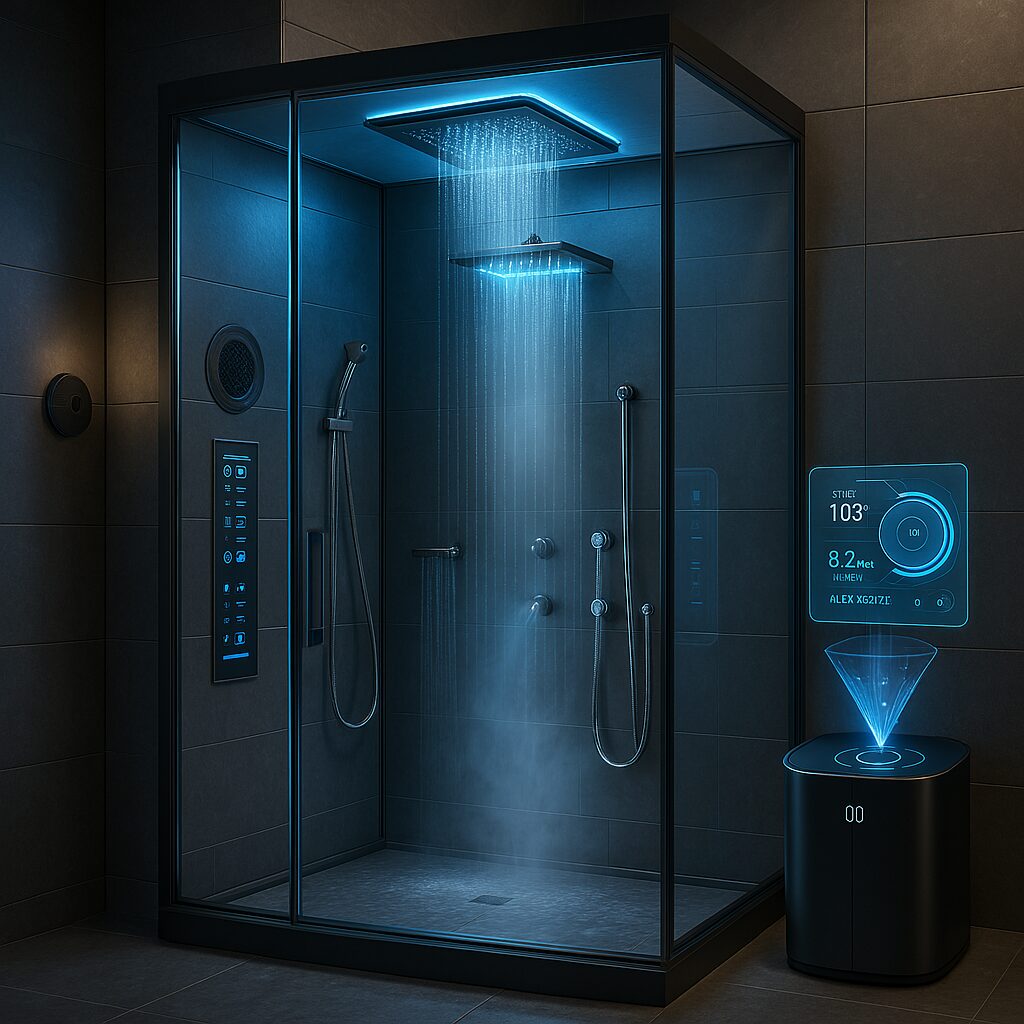
Use visuals to communicate intent, then validate with measurable criteria: responsiveness, splash control, and service access in a real mockup.
Research & Independent Studies on Touchless Restroom Performance
We conduct research because evidence-based design reduces risk. Our work focuses on user interaction, sensor stability, material durability, water performance, and lifecycle outcomes.
Why do we conduct research on touchless faucets in public transportation facilities?
Aviation restrooms are high-impact environments where hygiene confidence, operational cost, and sustainability intersect. Research helps prevent expensive mistakes, such as sensors that misread under lighting conditions or finishes that fail under aggressive cleaning. By grounding guidance in observed outcomes, we help AEC and operations teams make decisions that remain defensible across terminals and multi-airport portfolios.
What do we research?
We research user behavior, sensor response patterns, water usage, finish performance, maintenance frequency, and downtime drivers. That includes how often users experience false triggers, which sink geometries reduce splash, and how cleaning products affect sensor windows and coatings. We translate findings into practical checklists and specification criteria.
Do we conduct field observations?
Yes. Field work helps us see how fixtures perform under peak surges, variable water pressure, continuous cleaning, and real maintenance constraints. We examine scaling, spotting, activation reliability, valve behavior, and service access. These observations become guidance that teams can apply during new builds or modernization projects without relying on idealized assumptions.
Do we collaborate with academic and professional partners?
Regularly. Partnerships improve rigor through surveys, controlled evaluations, and transparent methods. Collaboration supports neutrality because findings are evidence-driven rather than marketing-driven. The outcome is guidance—briefs, checklists, and spec-oriented recommendations—that AEC and operations teams can trust.
About Our Nonprofit Organization
We provide independent, research-based guidance for touchless faucets and airport restroom performance. We do not endorse brands or sell products; our goal is education and better built environments.
What is our mission?
Our mission is to advance high-traffic touchless restroom design through independent research, education, and collaboration. We help AEC professionals and operators understand how faucet behavior affects hygiene confidence, water performance, maintenance workload, and lifecycle cost. We publish guidance focused on system performance rather than marketing narratives, aiming to reduce waste and improve uptime across large facilities.
Do we endorse products or brands?
No. We remain independent and do not certify or promote manufacturers. We may reference FontanaShowers, BathSelect, and other related brands as examples of market categories and design approaches—without implying a purchase recommendation. Our emphasis stays on measurable criteria: reliability, serviceability, finish performance, sensor stability, and lifecycle value.
Who benefits from our work?
Architects, engineers, airport operators, airline facility teams, developers, procurement teams, investors, and students benefit from our guidance because restrooms influence both public perception and operational economics. Designers use our frameworks to specify durable systems; operators use our recommendations to reduce downtime and service calls. Owners gain lifecycle predictability and measurable performance insights.
How do we share our findings?
We share findings through open-access guides, research summaries, technical briefs, and educational articles designed for AEC workflows. We aim for clarity: what we observed, what it implies, and what actions teams can take. We also provide spec-oriented checklists that support drawings, submittals, commissioning, and O&M documentation so projects remain maintainable after handover.
WordPress note: This page uses always-visible answers (no accordions) to improve readability and indexing. Images are set to “contain” so they do not crop. If you replace images, use high-resolution Media Library URLs for best results.
Community, Education & Engagement
We welcome real-world questions and case studies. Our aim is a shared knowledge base that helps airport and airline restrooms perform better globally, across budgets and building types.
Can AEC and facilities teams ask us technical questions?
Yes. We welcome project questions from architects, engineers, operators, and owners. The most useful questions focus on tradeoffs: how to keep touchless faucets reliable under peak loads, how to reduce water use without harming usability, and how to choose finishes that survive continuous disinfecting and abrasion.
Can projects be featured?
Yes. We publish educational case studies focused on lessons learned, not promotion. The most helpful features include measurable outcomes such as reduced service calls, improved uptime, lower water use, and longer finish life. We encourage contributors to share what worked, what failed, and what they would change next time, because transparent learning improves the broader industry.
Do we work globally?
Absolutely. Aviation facilities are international, and our research accounts for local water conditions, cultural expectations, and regulatory differences. Global work helps us identify patterns: how hard water affects scaling, which finishes resist certain cleaners, and how climate impacts humidity and ventilation. We use this perspective to provide adaptable guidance that supports projects across regions while respecting local standards and operational realities.


Architectural critique and design thinking
- From Home to Hotel: A Design Comparison Across 20 Bathrooms – Useful framework for spatial planning, detailing, and user-focused restroom experience thinking (adaptable to aviation public restrooms).
- The Subtle Art of Hotel Bathroom Design – Breaks down how layout, lighting, material, and decisions affect comfort and perceived cleanliness (adaptable to high-traffic restrooms).
- Hospitality Design Blog – Lesley Wong Interiors – Perspectives on guest experience, finishes, durability, and operational reality that can inform aviation restroom zones.
Trend summaries and planning guidance
- Four Trends in Hotel Bathroom Design – Trend summary useful for materials, layouts, and hygiene cues (adaptable to transportation hubs).
- Top Hotel Bathroom Design Trends 2025 – A 2025-focused trend roundup that can be translated into public restroom durability and usability criteria.
- Shower Design Trends in Hospitality – Glazing and maintenance perspective useful for wet-area planning and cleaning compatibility thinking.
- Design and Trends – HospitalityShowers – Curates layouts, materials, technology, sustainability, and comfort outcomes that translate into spec checklists.
- The Rise of Smart Showers in Luxury Hospitality Design – Smart controls thinking applicable to monitoring and commissioning mindsets.
- Top Hospitality Shower Brands Ranked by Architects and Designers – Spec-first comparison framing useful for building a neutral evaluation rubric.
Hotel case examples and project galleries
- Case Studies – HospitalityShowers – Case-study structure can be adapted to aviation restroom post-occupancy learning.
- How Shower Design Shapes Guest Satisfaction in Modern Hotels – Experience/performance linkage useful for translating into handwashing experience KPIs. {index=10}
- HospitalityShowers – A hub for experience, durability, and specification thinking that can inform touchless restroom frameworks.
Product and construction deep dives
- 5 Hotel Bathroom Design Ideas Including Shower and Bathroom Wall Panels – Multi-unit construction perspective useful for retrofit speed, modularity, and durability mindsets.
Commercial design industry portals
- Boutique Design – Hospitality Design News – Broader interiors news that can inform material/finish and operational trends.
Inspiration libraries AEC-friendly visual references
- 37 Bathroom Shower Ideas to Elevate Your Home – Visual benchmarks for palettes, enclosure concepts, and lighting moments (adaptable to public restroom aesthetics).
- 61 Breathtaking Walk-In Shower Ideas for Any Size Bathroom – Layout and material cues that translate into wet-zone detailing and cleaning strategy thinking.
- We’re Only Taking Reno Inspiration From Hotel Bathrooms From Now On – Material and layout inspiration; use with a durability and maintenance filter.
General inspiration pages included from your list
- 14 Modern Hotel Bathroom Aesthetic: Fresh Ideas for Your Space – Visual cues for finishes, lighting, and luxury-feel composition (adaptable to premium terminal zones).
- 12 Best Hotel Bathroom Design Ideas That Blend Comfort and Luxury – Curated ideas emphasizing comfort and durability themes; translate into maintainable details for public restrooms.