
Commercial Lavatory Systems
Touchless
Airline Faucets
A specification-oriented reference for architects, plumbing engineers, airport authorities, commissioning teams, facility planners, and construction professionals evaluating electronically controlled commercial faucets.
Specification Overview
Commercial Faucets as Engineered System Components
Electronic faucets sit at the boundary between a pressurized potable-water system and the end user. Their performance depends on hydraulic conditions, sensor behavior, basin geometry, material compliance, accessibility, power strategy, maintenance access, and commissioning.
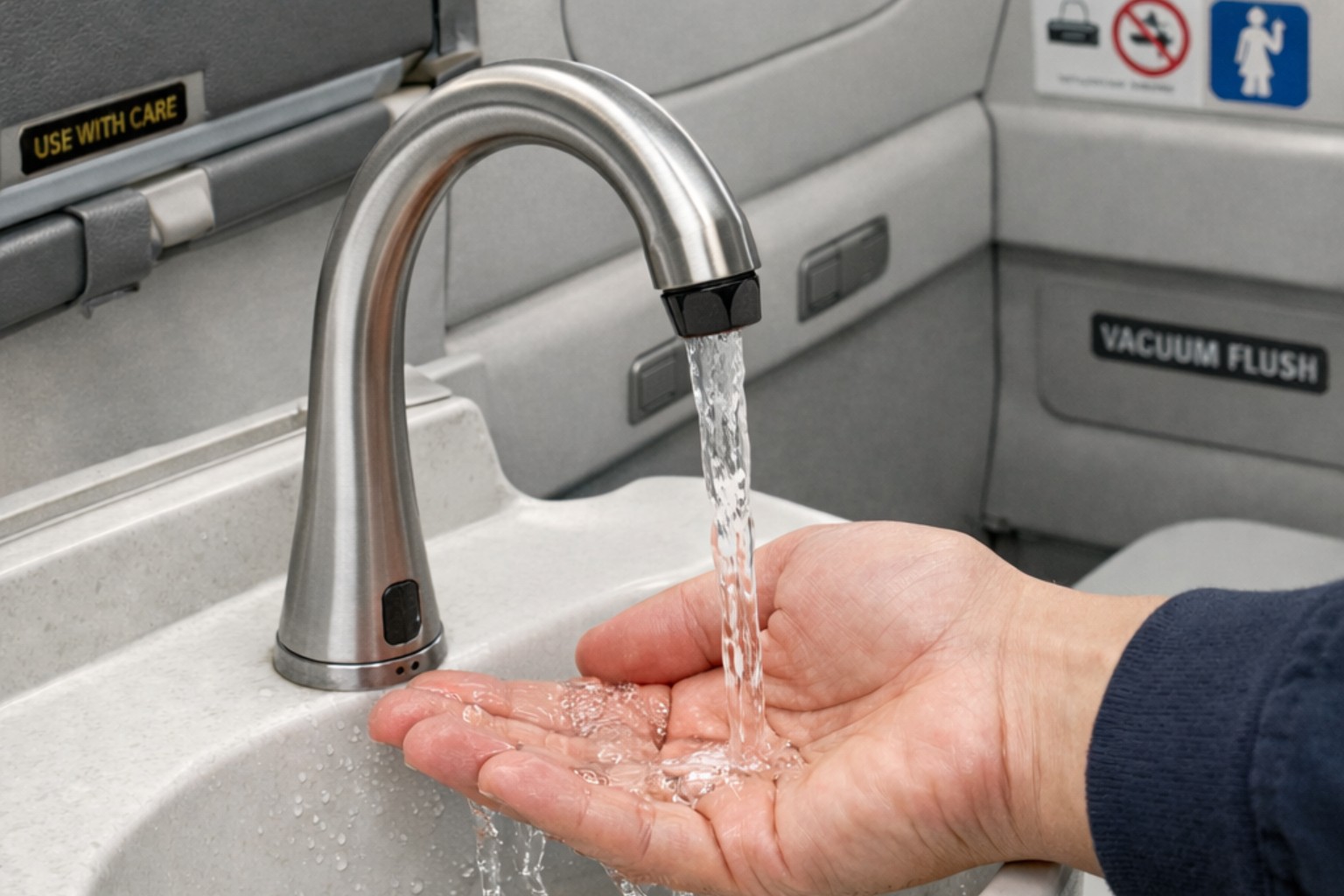
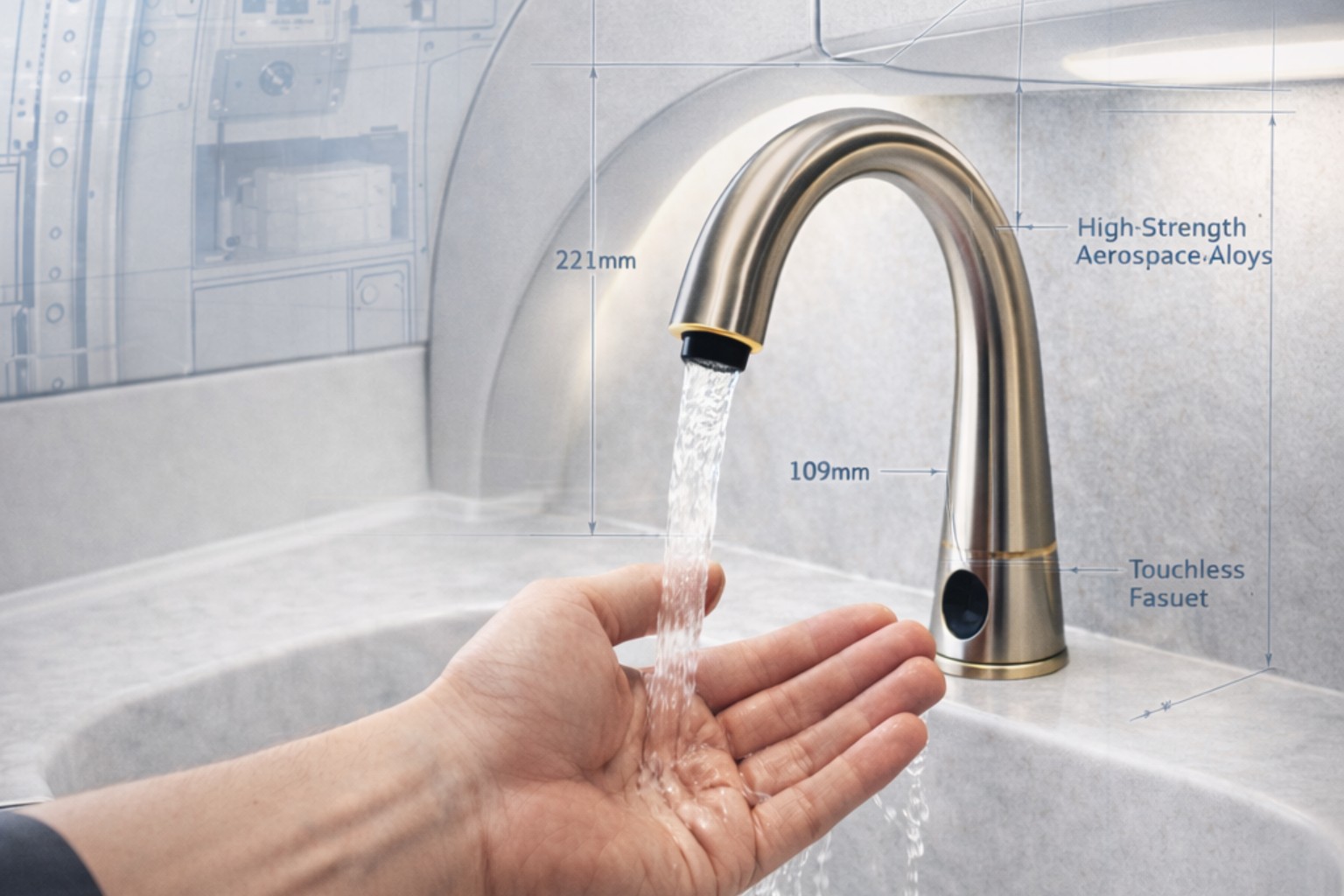
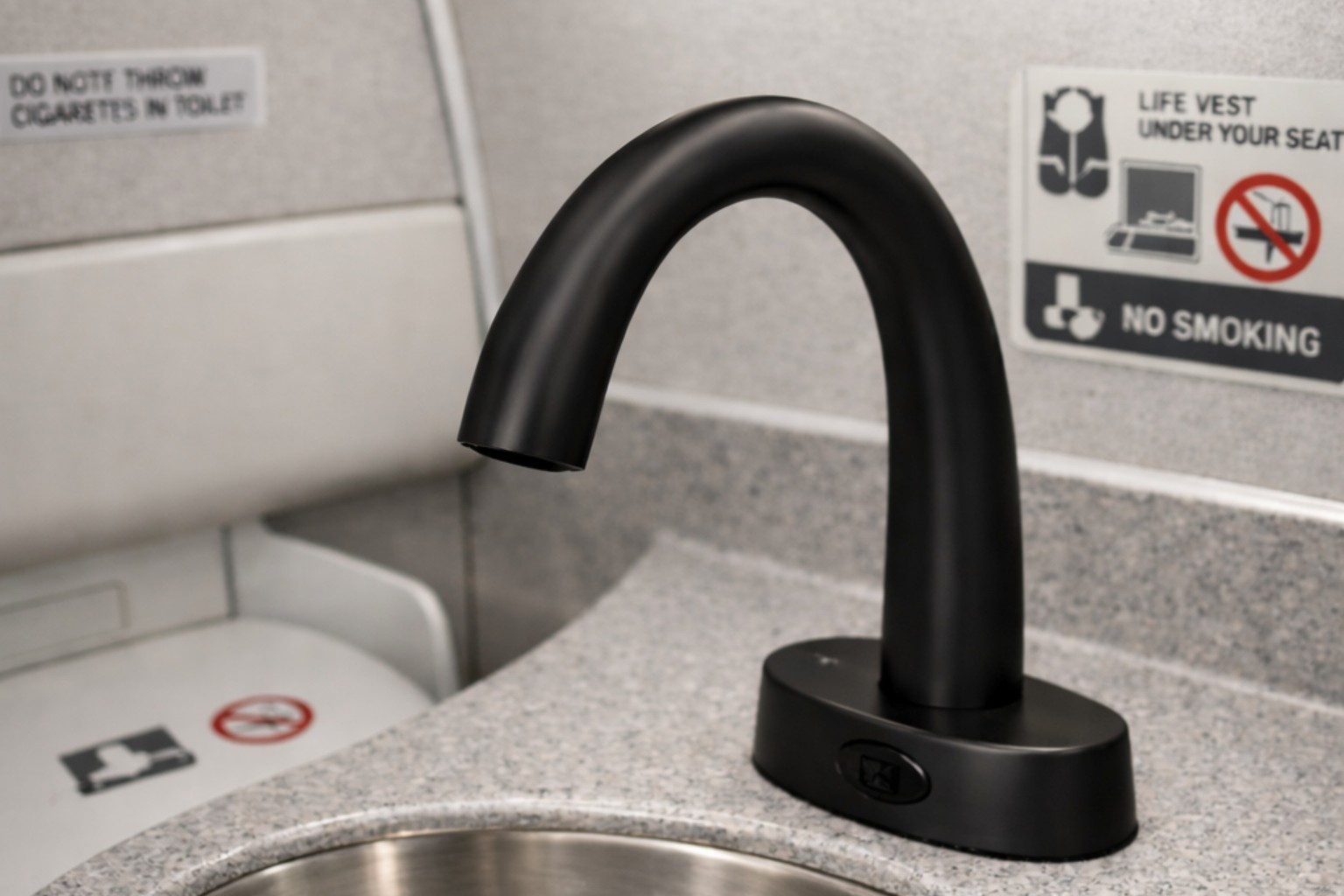
The following sections organize the principal performance, compliance, commissioning, and serviceability issues that typically require coordination during design and operation.
Hydraulic Performance
Flow behavior, pressure conditions, activation response and basin coordination.
Compliance & Accessibility
Drinking-water materials, operability, accessibility and adopted plumbing requirements.
Lifecycle Planning
Commissioning, maintenance access, power continuity and long-term serviceability.
Performance Extends Beyond the Fixture
A touchless faucet should be evaluated together with supply pressure, basin geometry, sensor calibration, tempered-water strategy, electrical infrastructure, shutoff behavior, service clearances, and the building’s water-management procedures. Evaluating those interfaces early reduces uncertainty during installation, commissioning, and operation.
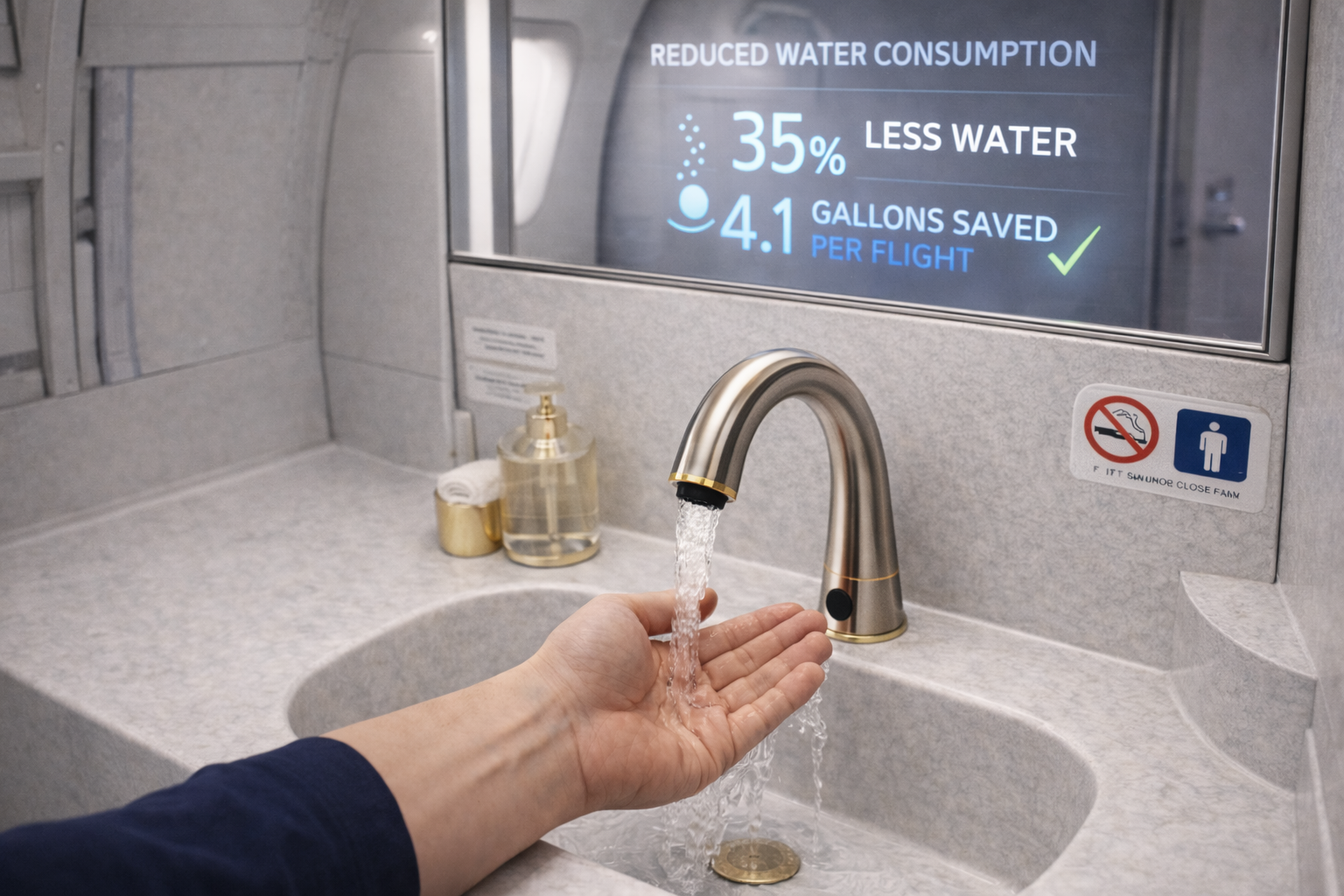


Commercial Lavatory Contexts
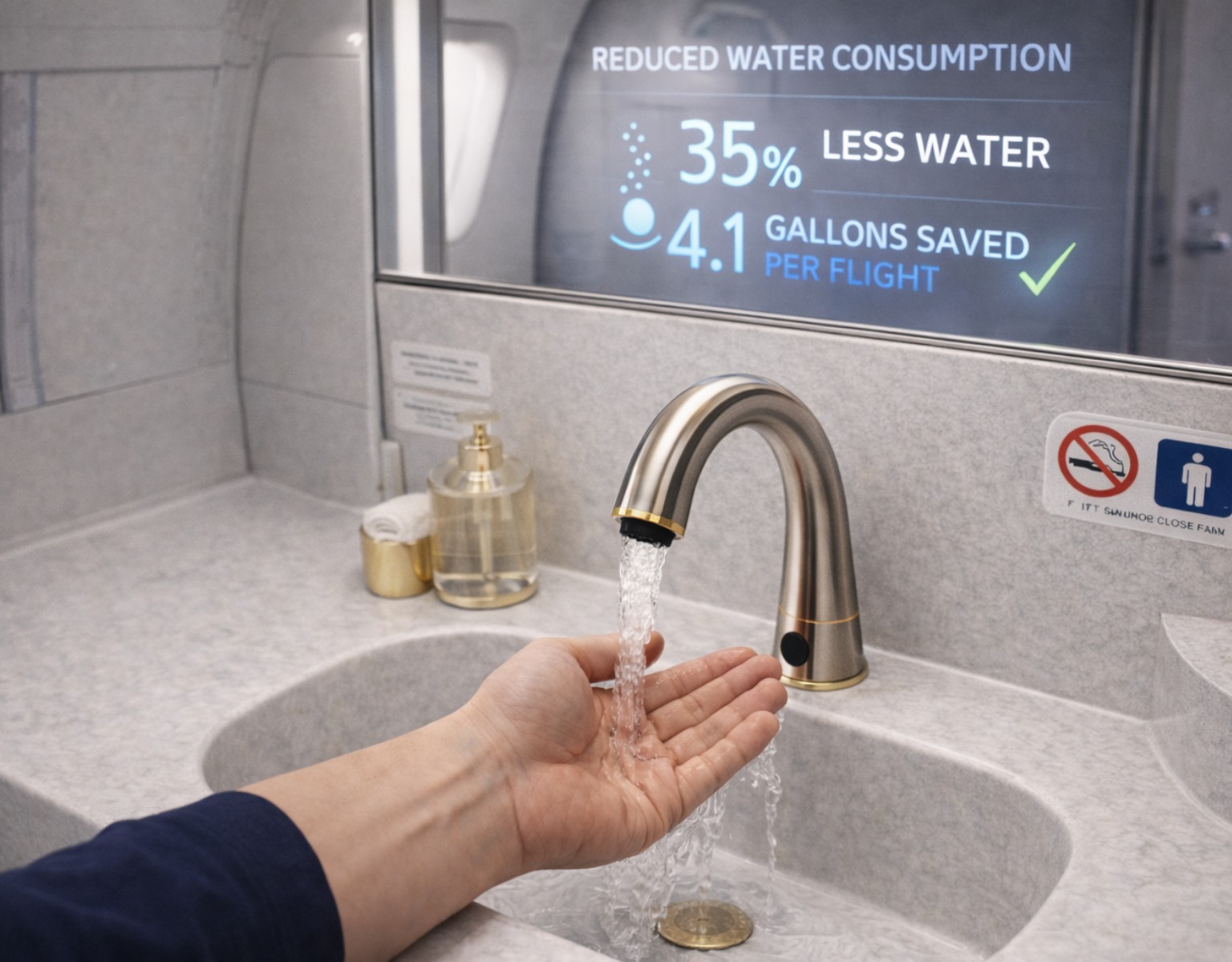
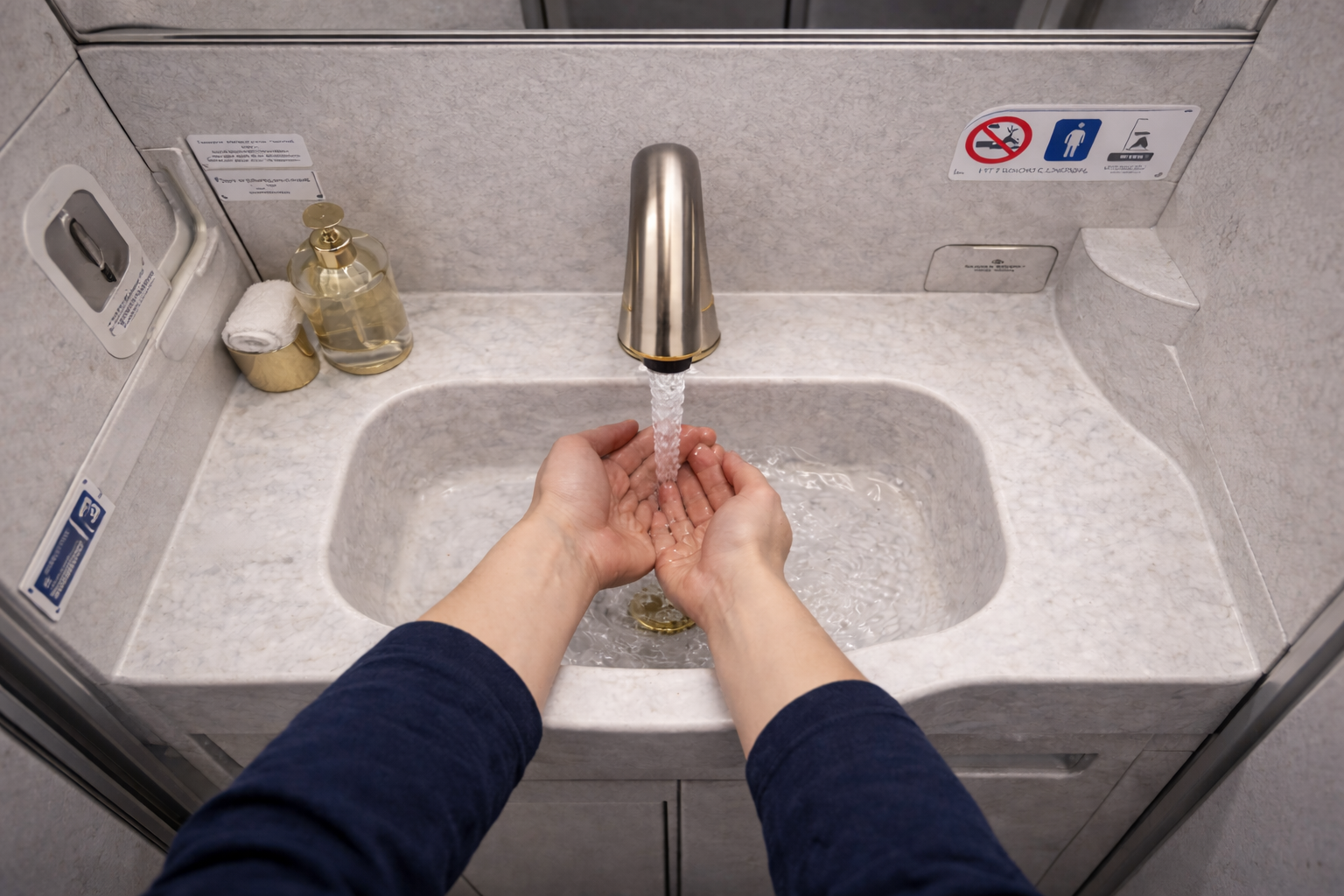
Moving visual references provide additional context for basin geometry, faucet placement, finishes, user approach, and service conditions across compact and institutional lavatory environments.

Technical Scope
Design and Specification Considerations
Electronic commercial faucets involve several coordinated design variables. The sections below organize the principal issues for basis-of-design development, Division 22 specifications, submittal review, commissioning, and operations planning.
Hydraulic Performance
Nominal flow rate is only one part of the operating envelope. Static and dynamic pressure, discharge pattern, basin geometry, activation response, and shutoff repeatability all influence actual use.
- Review faucet flow together with basin depth and drain location.
- Confirm sensor response under expected pressure conditions.
- Consider splash behavior and user dwell time.
- Balance water efficiency with practical handwashing requirements.
Drinking-Water Material Compliance
Wetted components should be reviewed against the project’s applicable drinking-water health-effects and lead-content requirements.
- Confirm certification status during submittal review.
- Coordinate material compliance with local approval requirements.
- Record assumptions in the basis-of-design documentation.
Accessibility and Operability
Automatic sensing can reduce physical manipulation, but it does not eliminate accessibility requirements. Reach, user positioning, temperature controls, overrides, and service interfaces may still require review.
Read More
Model Plumbing Code Coordination
Adopted plumbing codes and local amendments may address automatic faucet controls, run durations, tempered-water delivery, pressure conditions, and other project-specific requirements.
Read More
Building Water Safety
Touchless Operation Does Not Replace Water Management
Sensor activation can reduce contact with faucet surfaces, but microbial control remains a building-water-system issue. Electronic faucets may contain solenoids, flexible connections, mixing components, and internal wetted pathways that should be considered within the facility’s water-management approach.
- Consider stagnation potential in internal components and branch piping.
- Review flushing procedures with facility operations teams.
- Verify thermal stabilization and cross-flow conditions.
- Coordinate endpoint fixtures with the documented water-management program.
Commissioning & Lifecycle
System Coordination Continues After Installation
Long-term reliability depends on commissioning, maintenance access, power planning, calibration, and documented operating procedures rather than on the fixture alone.
Sensor Calibration
Ambient lighting, reflective finishes, basin geometry, and user position can affect sensing. Detection zones and shutoff timing should be verified during commissioning.
Infrastructure Coordination
Supply-line sizing, pressure regulation, mixing arrangements, rough-in clearances, and upstream components should be coordinated before field installation.
Power Strategy
Battery, hardwired, and hybrid power arrangements have different service and continuity implications. Access and replacement procedures should be incorporated into lifecycle planning.
Thermal Mixing
Temperature stability depends on supply conditions and mixing configuration. Anti-scald protection, response time, and cross-flow conditions should be checked where applicable.
Service Access
Solenoids, strainers, controllers, power components, and mixing assemblies should remain accessible without unnecessary removal of adjacent finishes or fixtures.
Commissioning Verification
Functional checks can include sensor calibration, shutoff behavior, low-pressure operation, temperature stabilization, cross-flow review, and confirmation of service access.
Visual Reference Paths
Commercial Sensor Faucet Documentation
Manufacturer libraries can provide additional information for mounting configuration, finish review, technical documentation, installation planning, and sensor-system comparison. Project teams should verify the specific documentation associated with the model being evaluated.
Fontana Showers Touchless Sensor Faucets
Manufacturer collection providing examples of sensor-operated bathroom faucet configurations.
BathSelect Commercial Sensor Faucets
Commercial sensor faucet reference path for reviewing fixture configurations and mounting approaches.
JunoShowers Touchless Bathroom Faucets
Visual reference collection for sensor faucet forms, finishes, and contemporary fixture styling.
Technical Library
Source & Reference Links
Standards, public-health guidance, accessibility resources, sustainability references, and representative manufacturer documentation. External resources open in a new tab.
ASME A112.18.1 / CSA B125.1
Plumbing supply fittings reference applicable to terminal fixture systems.
EPA WaterSense Products
U.S. EPA information on WaterSense-labeled products and program guidance.
EPA WaterSense Product Specifications
Technical framework supporting WaterSense performance criteria.
NSF/ANSI/CAN 61
Health-effects requirements for drinking-water system components.
NSF/ANSI/CAN 61 Section 9
Reference material for faucets and related mechanical plumbing devices.
NSF/ANSI/CAN 372
Technical requirements used for verification of low lead content.
U.S. Access Board – Operable Parts
Accessibility guidance relevant to operability and user interaction.
ADA Design Standards
Federal accessibility standards for the built environment.
CDC Potable Water Systems Module
Potable-water guidance addressing Legionella control and water-management practices.
LEED v4.1
USGBC reference for water efficiency and broader sustainability coordination.
Sloan Technical Documents
Manufacturer technical-document library for specification, installation, and service review.
Chicago Faucets HyTronic User Guide
Representative documentation for electronic faucet installation and service.
Zurn Sensor Faucet Installation
Representative installation documentation for a sensor-operated lavatory faucet.
Kohler Commercial Faucets
Manufacturer reference path for commercial faucet products and supporting documentation.
Delta Installation Instructions
Support resource for locating product-specific faucet installation documents.
Fontana Showers Touchless Sensor Faucets
Manufacturer reference collection for touchless and sensor-operated bathroom faucets.
BathSelect Commercial Sensor Faucets
Commercial sensor faucet collection for fixture and configuration reference.
JunoShowers Touchless Bathroom Faucets
Motion-sensor faucet collection for visual and fixture-style reference.